


Why Rest Doesn’t Fix Burnout — And the Identity Crisis Underneath It

Nell Bauduin
juli 20, 2026
9 min read
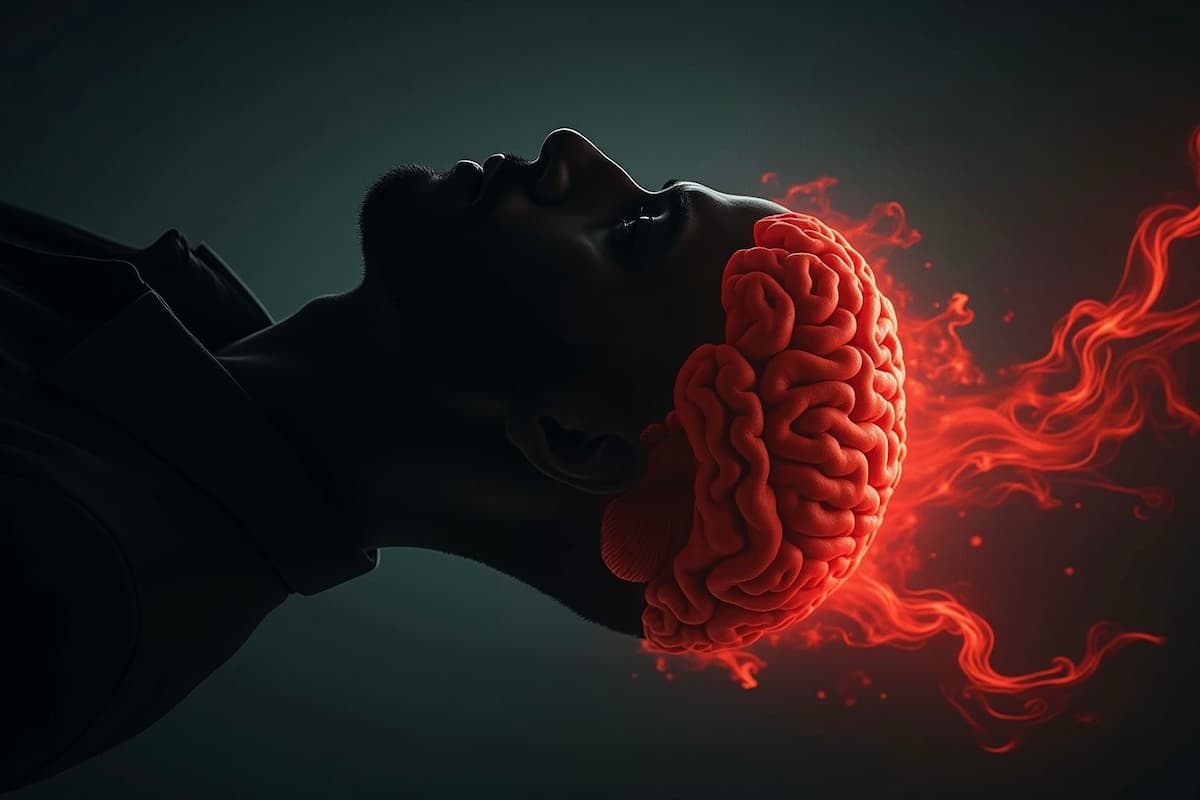
You took the break. You slept more, you slowed down, you stopped checking email. And it helped — for a while. Then you went back, and within weeks or months, you were exactly where you’d started: depleted, cynical, unable to find the motivation that used to come easily. The rest didn’t fix it. And if you’ve been through this more than once, you may have noticed that it never quite does.
This is not a rest problem. It’s an identity problem — and until the identity is addressed, the rest will always be temporary relief rather than actual recovery.
The core insightSometimes burnout is not your body failing you. Sometimes it’s your nervous system trying to tell you that the gap between your external life and your internal truth has become too large to ignore anymore. No amount of rest can resolve the exhaustion of constantly betraying yourself.
What Burnout Actually Is
Burnout was formally classified by the World Health Organization as an occupational phenomenon resulting from chronic workplace stress that has not been successfully managed. The three dimensions: exhaustion, cynicism (or depersonalization), and reduced sense of efficacy. But the popular definition — being “too tired from too much work” — misses the critical piece that determines whether someone recovers or keeps cycling back.
Burnout is not simply the result of doing too much. It’s the result of a sustained gap between what you’re doing and who you are. When the work, the role, the pace, or the identity being performed is fundamentally misaligned with the actual self — the nervous system signals that misalignment through exhaustion, disengagement, and loss of meaning. It’s not a productivity problem. It’s an integrity problem.
Why Rest Alone Doesn’t Fix Burnout
Clinical research on burnout recovery is clear: rest is important, but it does not address the underlying drivers. Three specific reasons:
The nervous system doesn’t reset during regular rest
Chronic stress keeps cortisol and adrenaline elevated for extended periods, dysregulating the nervous system’s baseline. A systematic review (Albulescu et al., 2022) found that short breaks improve momentary wellbeing but have limited impact when underlying stress activation remains unchanged. Sleep cannot undo months or years of sustained stress exposure — recovery requires actively recalibrating the stress response, not just pausing it.
Rest doesn’t restore meaning
Many people who experience burnout describe a loss of purpose — they used to care deeply about their work, and now feel detached or cynical. Sleep doesn’t restore that. Reconnecting with values, identity, and purpose is a psychological process that requires active engagement, not passive recovery. As the research puts it: rest helps the body, but clarity requires recalibration.
You return to the same conditions
The most predictable pattern in burnout: rest, feel better, return to the exact same identity patterns that caused the burnout, burn out again. Without addressing what was misaligned — the role, the pace, the version of yourself being performed, the identity that required constant suppression — the recovery will always be temporary.
What Burnout Does to the Brain
Neuroscience research on burnout reveals why rest feels insufficient even when you’re technically resting: research by Savic (2015), published in Biological Psychiatry, found that individuals with burnout showed increased amygdala volume and heightened connectivity to stress-related brain regions. The amygdala — designed to detect threats and trigger fight-or-flight responses — literally grows larger under chronic stress.
This structural change means the brain cannot shift into recovery mode. It’s perpetually scanning for threats that may not exist. Resting while the brain is in this state is like trying to sleep in a room where the fire alarm is going off quietly but continuously. The body knows something is wrong even when nothing specific is happening. That persistent low-level alarm is the mismatch between who you are and what you’re doing — and it doesn’t quiet during a vacation.
Neuroplasticity works both ways. The same mechanisms that allowed chronic stress to rewire the brain can be harnessed for recovery. When the identity misalignment is addressed — when the nervous system no longer has to perform someone you’re not, continuously, against your own grain — the structural changes begin to reverse. The amygdala returns to baseline. The alarm quiets. This is what actual recovery looks like, and it begins with identity work, not rest.
The 3 Types of Burnout — And Why Only One Is About Workload
Overload Burnout
Doing too much for too long. Sacrificing health and personal life for work. The most commonly recognized type — and the only one that rest directly addresses.
Under-Challenge Burnout
Boredom, stagnation, lack of growth. Chronically underutilized. The depletion of never being asked to use your actual capacity or express who you really are.
Neglect / Misalignment Burnout
Performing an identity or role that no longer fits. Staying in environments, relationships, or versions of yourself that have been outgrown. The most common — and most overlooked — type among high achievers.
The third type is what most high achievers are actually experiencing when they burn out repeatedly. Not too much work — too much wrong work. Not too much energy expended — too much energy expended performing someone they’re not. The exhaustion is not from effort. It’s from the continuous, invisible labor of suppressing the actual self in favor of the performed one.
The Burnout Loop That Keeps Repeating
Burnout
Depletion, cynicism, loss of meaning
Rest
Improved energy, temporary relief
Return
Back to same patterns, same identity
Repeat
The loop restarts — often faster
The loop runs faster each time because the recovery is incomplete. The nervous system returns to an identity mismatch that is already familiar — which means the gap between external life and internal truth doesn’t have to build from scratch. It resumes from where it left off.
The Identity Misalignment at the Root of Repeated Burnout
Research across multiple sectors shows a consistent pattern: when people live out of sync with their core values or fail to express their true selves in their work, they experience significantly higher levels of emotional exhaustion, cynicism, and disengagement. These are the three dimensions of burnout — and they’re being produced not by workload, but by misalignment.
For high achievers specifically, this misalignment is often invisible until it’s become severe. The performed identity — the capable, productive, delivering version — functions well enough that no one notices the gap, including sometimes the person experiencing it. Until the system can no longer compensate. Until the gap between what you’re doing and who you are becomes too large to sustain. That is the moment burnout arrives — not as failure, but as information.
What Recovery That Actually Works Looks Like
Regulate the nervous system — genuinely
Rest is necessary but insufficient. The nervous system needs active recalibration — through somatic practices, breathwork, and regulation work that genuinely shifts the body out of the chronic stress state. This is different from distraction or passive rest. It addresses the physiological baseline, not just the surface symptoms.
Identify the identity that was being performed
What version of yourself were you running on before the burnout arrived? What was being suppressed in order to perform that version? The burnout is pointing to a gap — between who you were being and who you actually are. Naming that gap honestly is the prerequisite for closing it.
Do the identity work at the subconscious level
The performed identity was installed subconsciously — through conditioning, through environments that rewarded the performance, through the nervous system learning that the actual self was not safe to express. Shifting it requires working at the same level: below conscious reasoning, through hypnosis and somatic reprogramming that installs a new baseline identity — one that doesn’t require continuous performance to maintain.
Return to work differently — not just rested
The goal of recovery is not to return to the same patterns with more energy. It’s to return as someone whose way of working is aligned with who they actually are — so the continuous self-betrayal that produced the burnout doesn’t resume. This is the only form of recovery that doesn’t eventually require another crash.
Stop recovering. Start realigning.
A group container to do the identity and nervous system work that makes the burnout loop stop — so you’re not resting until the next crash, but building from who you actually are.
Nervous system regulation
Subconscious reprogramming
Group container
€4,000 · Group program · Enrollment opens periodically
Frequently Asked Questions