


You’re Not Making Business Decisions — Your Nervous System Is

Nell Bauduin
augustus 10, 2026
9 min read
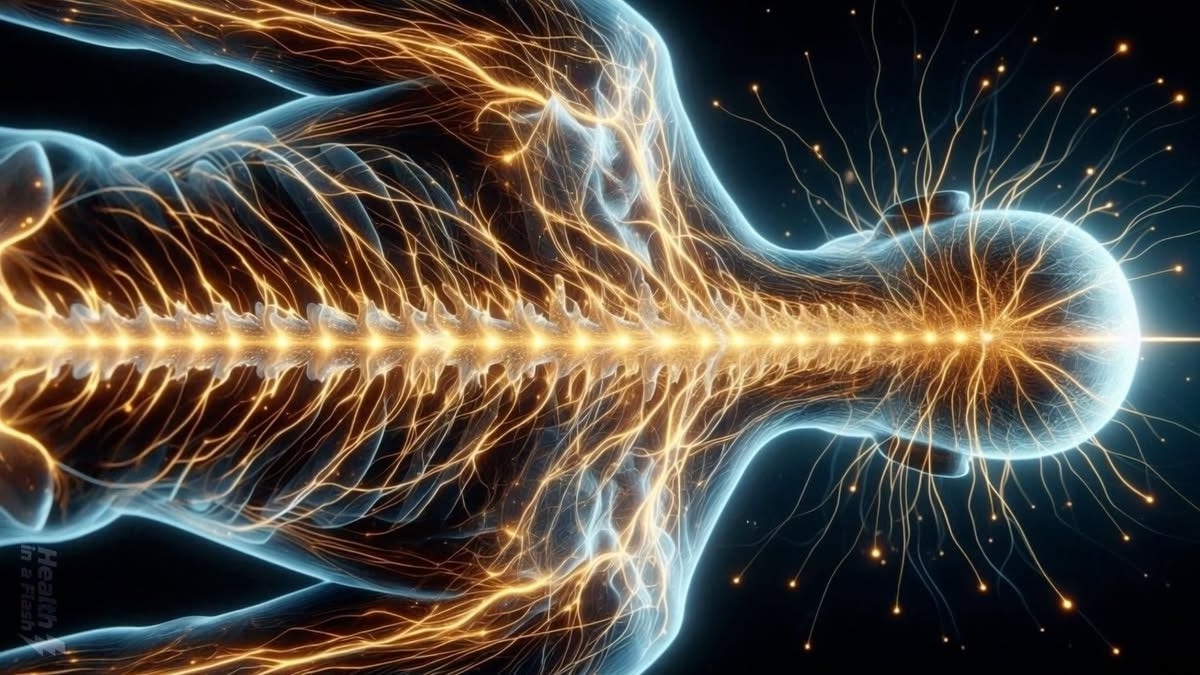
You have a potential client. They ask about your price. Before they’ve said a single word about whether it works for them, you’ve already considered lowering it. Not because the value isn’t there — you know it is. Because the nervous system has assessed the situation as threatening and is driving the response.
This is not a strategy problem. This is not a pricing confidence problem. This is what every business decision looks like when it’s being made from a dysregulated nervous system state: it presents as strategy while being driven entirely by the body’s threat assessment.
The core insightEmotional regulation and business decisions are not two separate things happening in sequence — first you feel something, then you make a rational decision. The state you’re in when you make the decision is one of its neurological inputs. Change the state, and the same situation produces a different decision.
State Is an Input, Not a Background
Research published in Springer Nature’s Neuroeconomics: Core Topics and Current Directions (Schmidt and Helion, 2026) confirms: emotion regulation and decision-making are integrated neural circuits. They are not sequential processes — feel something, then decide — but simultaneous ones, especially for decisions involving risk and reward paired with uncertainty. This is the category that includes every meaningful business decision: what to charge, whether to invest, what to decline, how visible to be, where to put your time and energy.
The state you bring to these decisions is not context. It is content. The nervous system’s current assessment of safety or threat is actively shaping which options appear available, which risks look reasonable, and what outcome feels worth pursuing. A decision made from a sympathetically activated state and a decision made from a regulated ventral vagal state are neurologically different decisions, even when they appear to be the same one on paper.
Damasio’s Somatic Markers: Emotions as Decision Inputs
Neuroscientist Antonio Damasio’s somatic marker hypothesis provides the foundational framework: emotions are not obstacles to good decision-making. They are inputs. The body continuously produces emotional signals — somatic markers — that guide decisions toward or away from certain outcomes based on associated emotional history. This is not irrational. It is a sophisticated system for incorporating embodied experience into choices.
The problem is not that somatic markers exist. The problem is which somatic markers are being generated in any given moment. When the nervous system is regulated and in a ventral vagal state, somatic markers reflect genuine values, long-term vision, and real capacity — they point toward what actually serves the business. When the nervous system is in sympathetic activation — in fear, urgency, or scarcity — somatic markers are generated by the threat state and point toward immediate survival rather than strategic alignment.
Neuroscience research on decision-making confirms: emotional interference systematically distorts perceptions of risk and reward. When the nervous system is in a threat state, the brain overestimates risk and underestimates reward — producing impulsive decisions, avoidance of profitable prospects due to fear, and reactive behavior that would appear irrational in hindsight. These are not strategy failures. They are accurate outputs of the state that generated them. The state was the problem, not the reasoning.
How Nervous System Dysregulation Distorts Business Decisions
Research on emotion and decision-making neuroscience (2025) documents the specific ways emotional dysregulation distorts business judgment: impulsive decisions that bypass considered evaluation, avoidance of profitable prospects due to fear-based risk overestimation, reactive behavior driven by the state’s threat assessment rather than genuine strategic evaluation, and difficulty accessing the regulated prefrontal reasoning capacity that would produce a different outcome. These patterns are not personality traits. They are nervous system outputs — and they change when the state changes.
The Same Decision, Two Nervous System States
Business decisions from dysregulation
- Price before the client even reacts
- Over-deliver to preempt disapproval
- Say yes to misaligned opportunities
- Avoid the visibility that would grow the business
- Retreat from investments at the last moment
- React to competitors instead of leading
- Set boundaries from guilt rather than from values
Business decisions from regulation
- Price holds without apology
- Deliver what was contracted — not more
- Say no to misaligned and yes to aligned
- Show up with chosen visibility
- Evaluate investments against genuine values
- Lead from clarity, not from reaction
- Set limits from identity, not from fear
The information available is the same. The business is the same. The strategy is the same. The state is different — and the state is what’s producing the decision.
How State-Based Decisions Show Up in Business
Pricing from fear rather than from value
When the nervous system perceives a pricing conversation as threatening, it overestimates the risk of loss and underestimates the cost of undercharging. The decision to lower the price before any objection has been raised is not a strategic concession. It is the somatic marker system generating a survival response: give the threat something to reduce it.
Saying yes to misalignment from urgency
When the nervous system is in scarcity or urgency, available opportunities look more attractive than they would from a regulated state — because the threat of not having enough overrides the assessment of genuine alignment. The yes to the misaligned client, the partnership that doesn’t fit, the project that drains — these are often made from urgency states rather than from considered evaluation.
Visibility decisions driven by threat rather than strategy
The decision of how visible to be — what to post, what to say publicly, how to show up — is one of the most consistently state-based business decisions available. From a regulated state: visibility is a strategic choice aligned with the business and identity. From a dysregulated state: visibility triggers threat responses (exposure, judgment, being seen) and the decision defaults to staying smaller than the business requires.
How to Identify When You’re Making a State-Based Decision
- The decision produces relief rather than clarity — relief signals that a threat response has been resolved, not that a good decision has been made
- You’ve made the same “decision” repeatedly without it feeling like a genuine choice
- The decision would look different if you were at your best — this is the clearest signal
- You notice physical tension or urgency in the moment of deciding
- The decision is a reaction to something external — a competitor, a comment, a client’s energy — rather than a reflection of internal values
Regulate First, Then Decide
The practical application of the nervous system and business decision research produces one clear strategic principle: never make a significant business decision from a dysregulated state. This is not about waiting to feel perfectly calm. It is about ensuring the decision is being made from the state where the somatic markers are generated by genuine values rather than by threat assessment.
The 24-Hour Rule
For any consequential business decision — pricing, significant yes or no, investment, visibility, client boundaries — wait 24 hours from a regulated state before committing. Not from the moment you receive the information (which may arrive in a state of activation), but from the moment you are regulated. The decision you make from that state is the one your strategy actually reflects. It is also the one you are least likely to regret.
Make decisions from your vision, not from your nervous system’s threat assessment.
A group container to build the regulated nervous system baseline that makes values-based business decisions the default — so pricing, visibility, and alignment come from clarity rather than from state.
Identity installation
Subconscious reprogramming
Group container
€4,000 · Group program · Enrollment opens periodically
Frequently Asked Questions